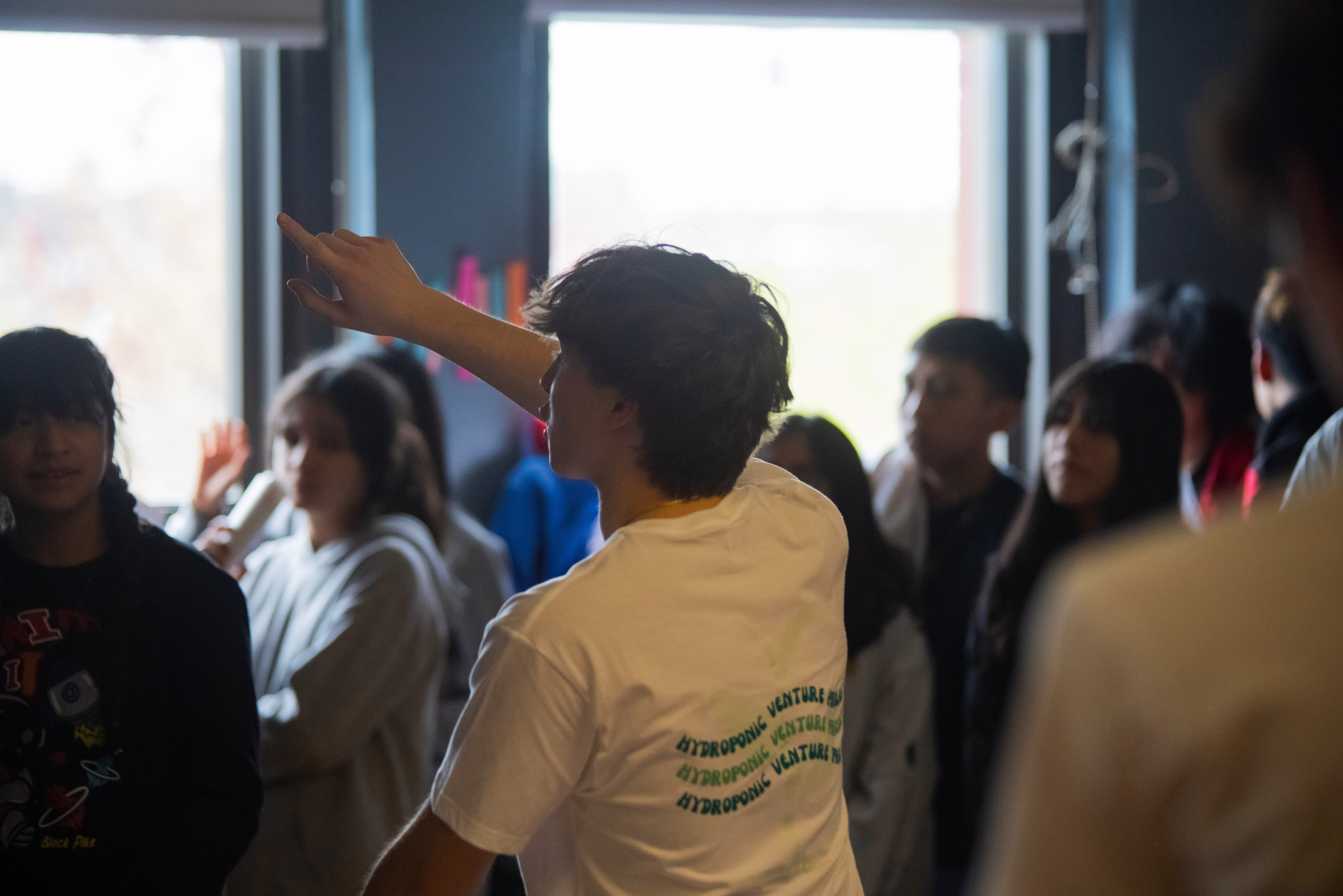
A classroom program schools can actually run
Systems, a standards-aligned curriculum, and a year of workshops, installed, trained, and supported by HVP at no cost to the school.
Everything needed, at no cost
When HVP partners with a school, the package is fixed and the delivery is on us.
- 01
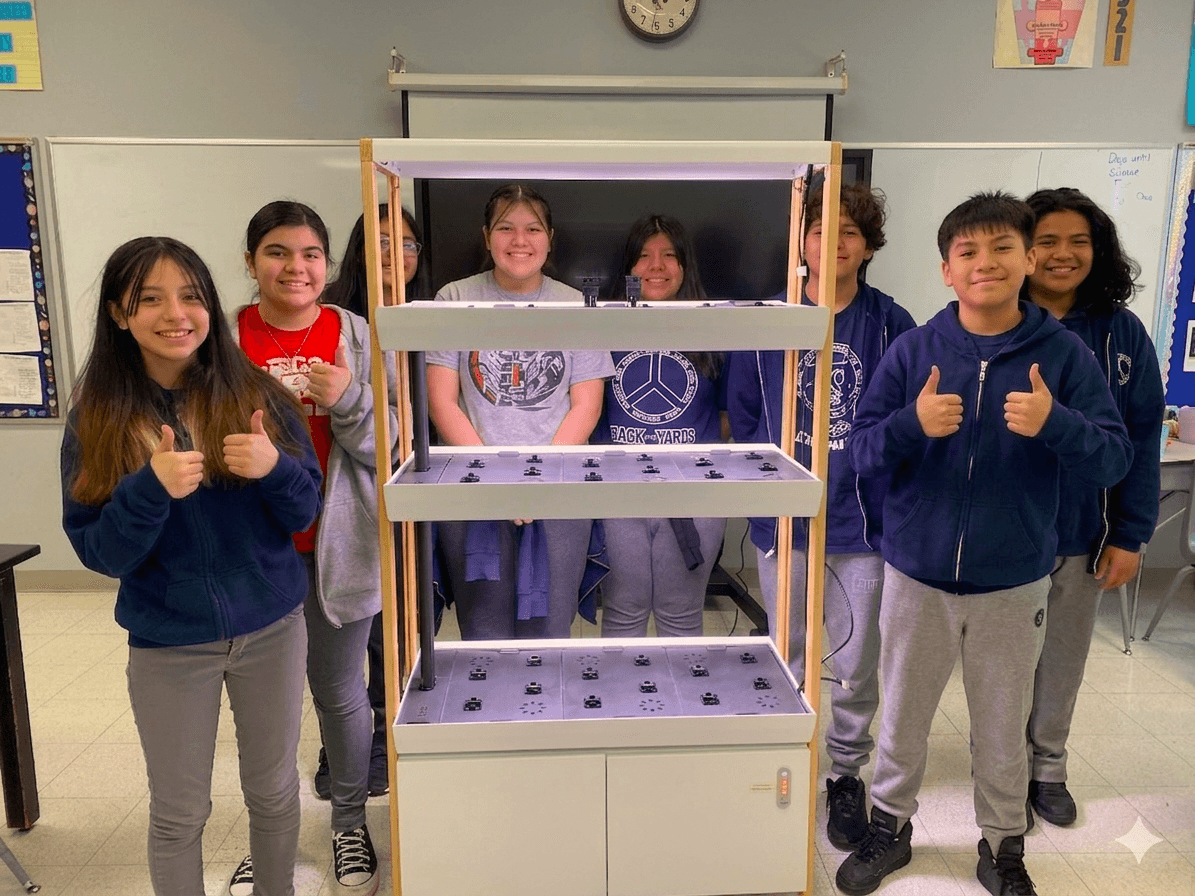
Classroom system
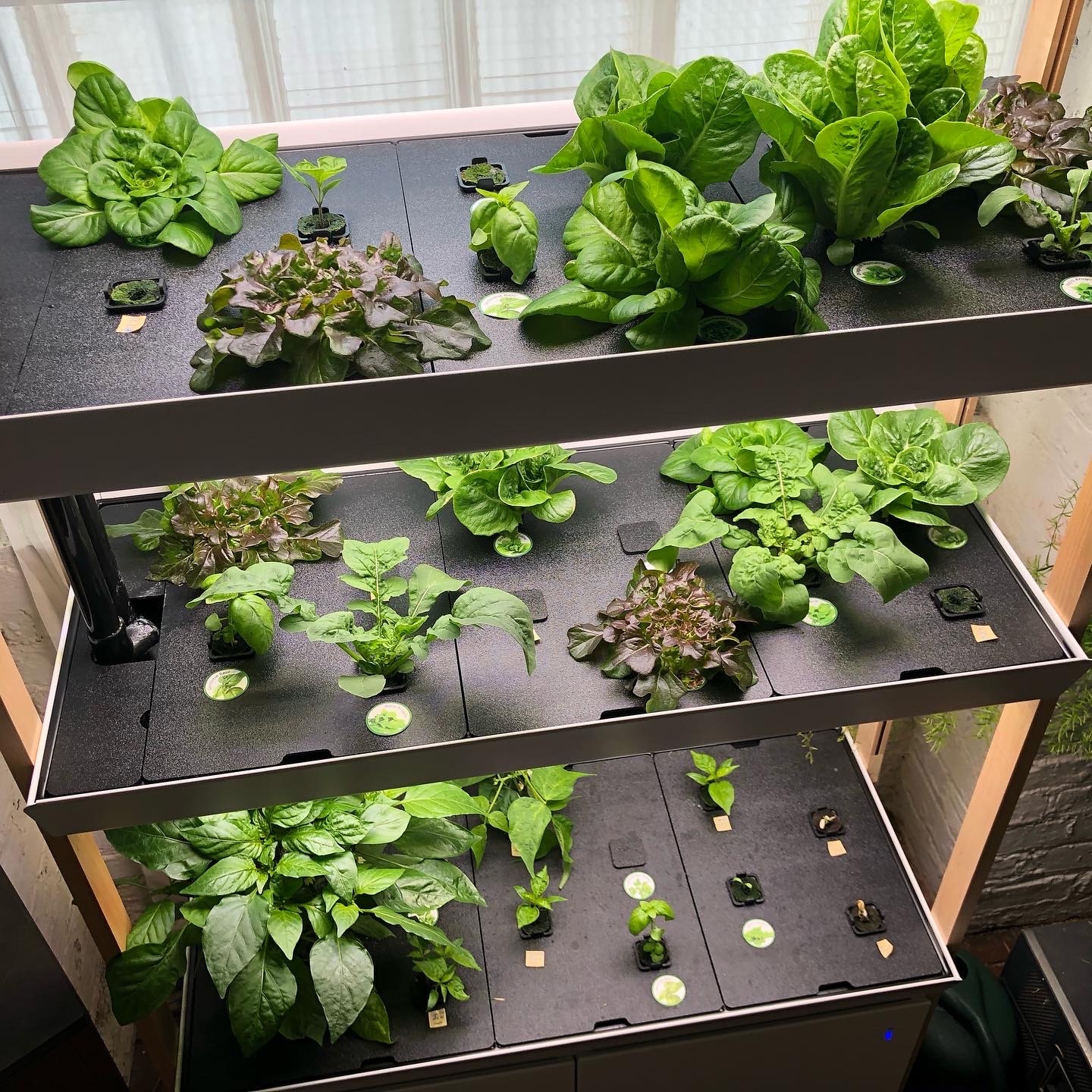
A 3-tier Rise Gardens unit, plus a full year of seeds and nutrients.
- 02
Semester curriculum
Six standards-aligned units, full lesson plans, teacher training, and on-site support.
- 03
Chef and community events
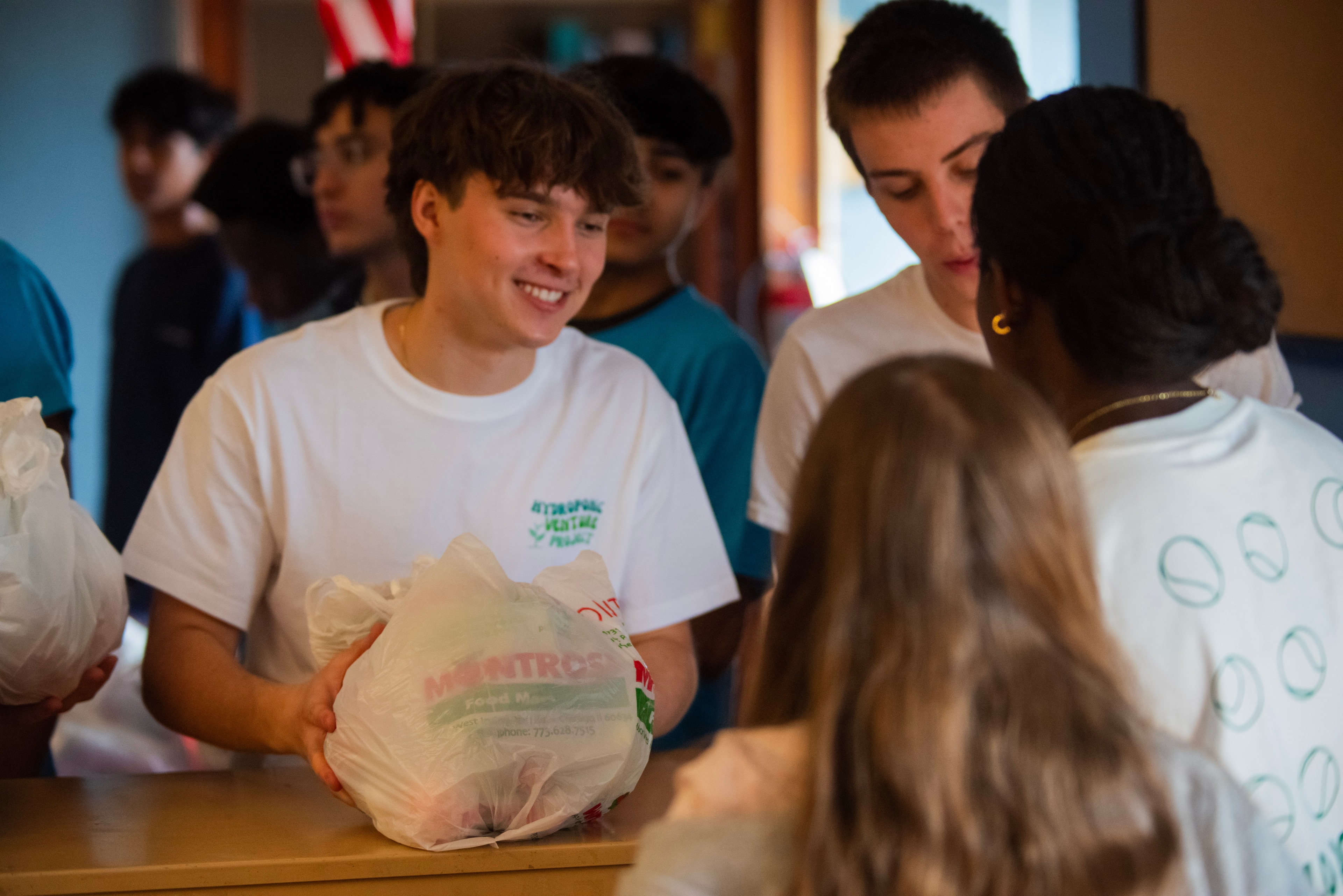
A chef-led culinary workshop, a nutritionist session, and a family distribution or community event every school year.
A classroom, a lead teacher, and real buy-in from administrators and educators who believe in the program and are ready to make it part of their school year.
Six units, one semester, grades 6–12
Standards-aligned and co-developed with Chicago Public Schools teachers.
Each unit pairs instruction with direct, hands-on work on the living system.
- 01
Systems and plant science
How hydroponic growing works: nutrient cycles, pH, light, and the biology of a plant from seed to harvest.
- 02
Sustainable agriculture
Water, land, and energy footprints of modern food systems, and how indoor growing fits inside a climate-aware food future.
- 03
Nutrition science
What the body actually does with food. Macronutrients, micronutrients, and how to read a plate instead of a label.
- 04
Culturally relevant cooking
Kitchen fundamentals built around the foods students already eat at home. Knife skills, heat, seasoning, and plating.
- 05
Food justice and access
Why some Chicago neighborhoods have grocery stores on every block and others have none, and what a single classroom garden can and cannot change.
- 06
Community impact project
Students plan and host a workshop, family distribution, or school event anchored by their own harvest. The program’s capstone.
One system, every classroom
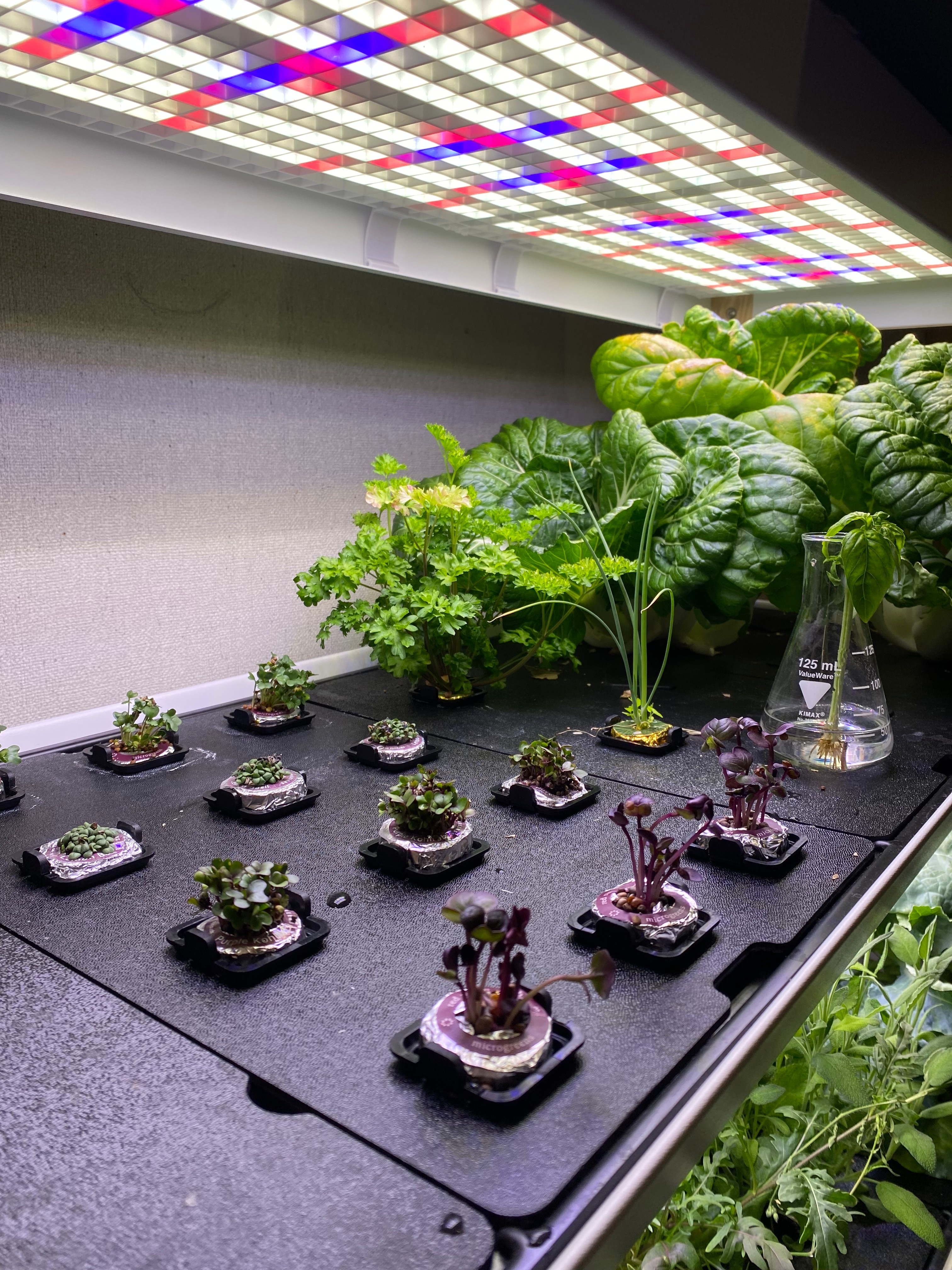
Every install is the same 3-tier Rise Gardens unit. It fits in a standard classroom, runs off a normal outlet, and produces a harvest every few weeks.
A companion app handles the day-to-day, so students can manage the garden themselves with teachers looking over their shoulder.
- Plants at once
- 36
- Footprint
- 3 × 2 ft
- Water use
- ~10 gal/mo
- Harvest cadence
- Every 4–6 wks
- Power
- Standard 120V outlet
- Teacher time
- ~15 min/day
up to 108 with 16-pod trays, depending on crop
standing classroom unit
90% less than soil-equivalent
year-round, indoors
no special wiring
student-run after training
“It’s really great that students have been able to see just how easy “healthy” can be with fresh food coming straight from the garden to the table.”
The program leaves the classroom
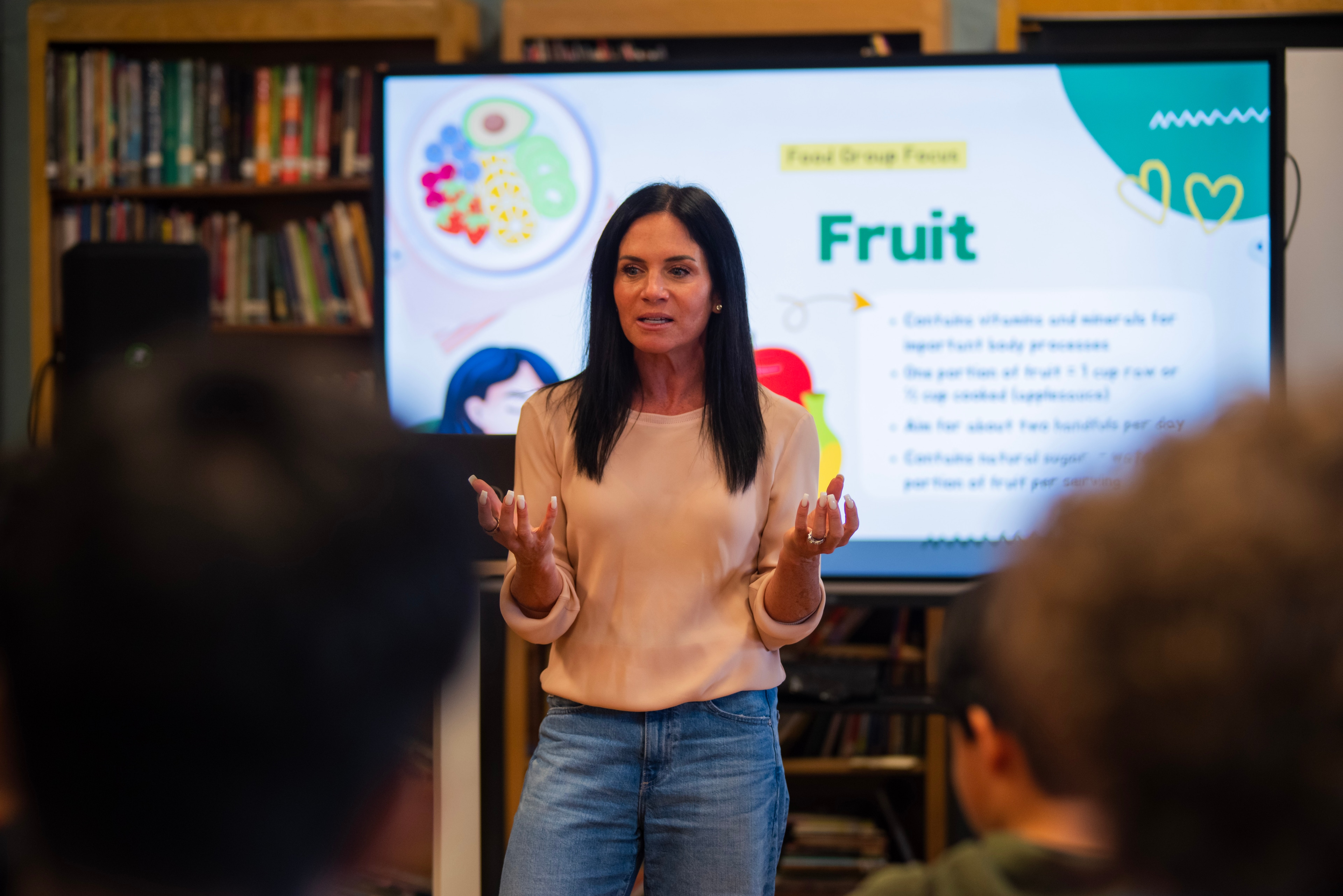
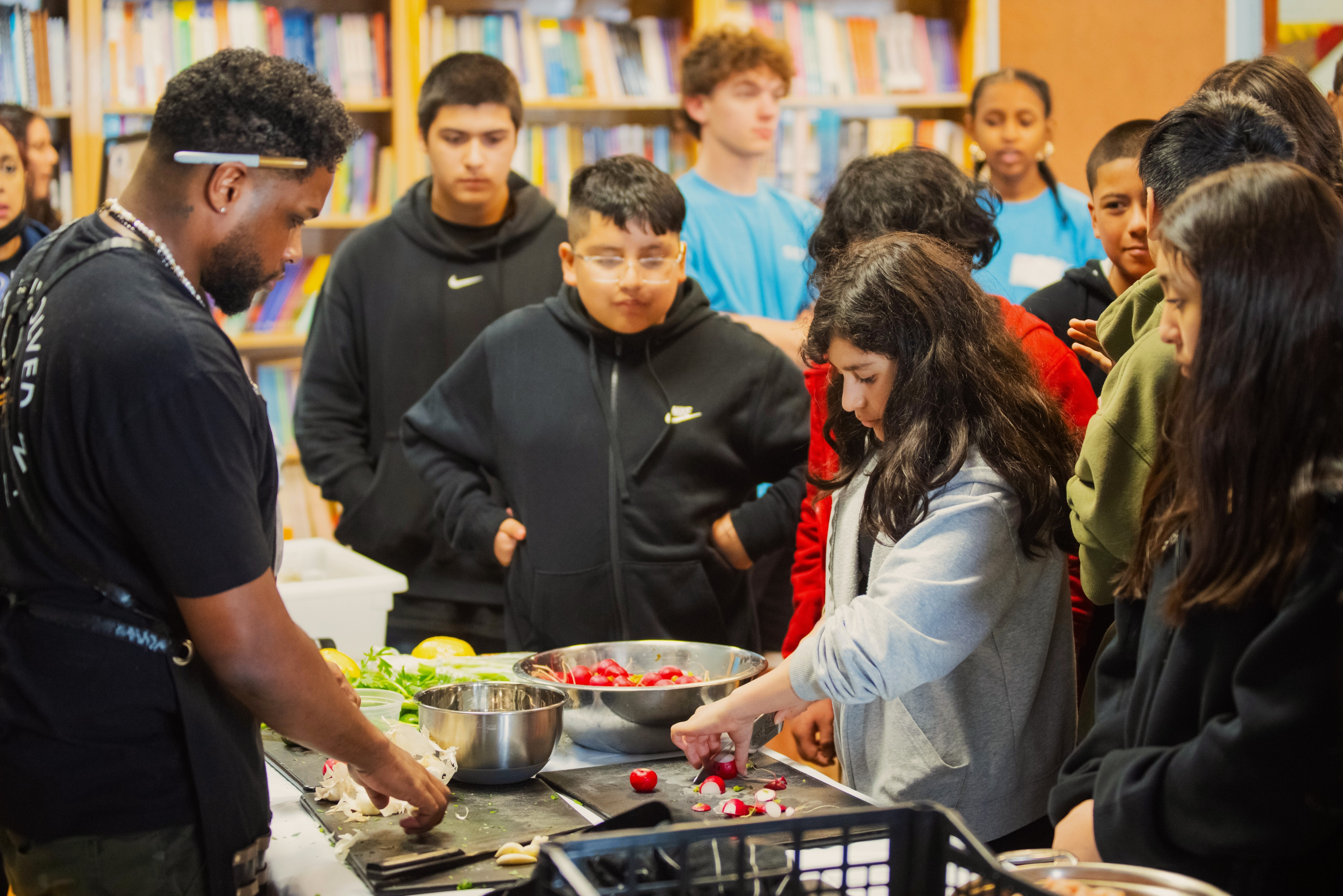
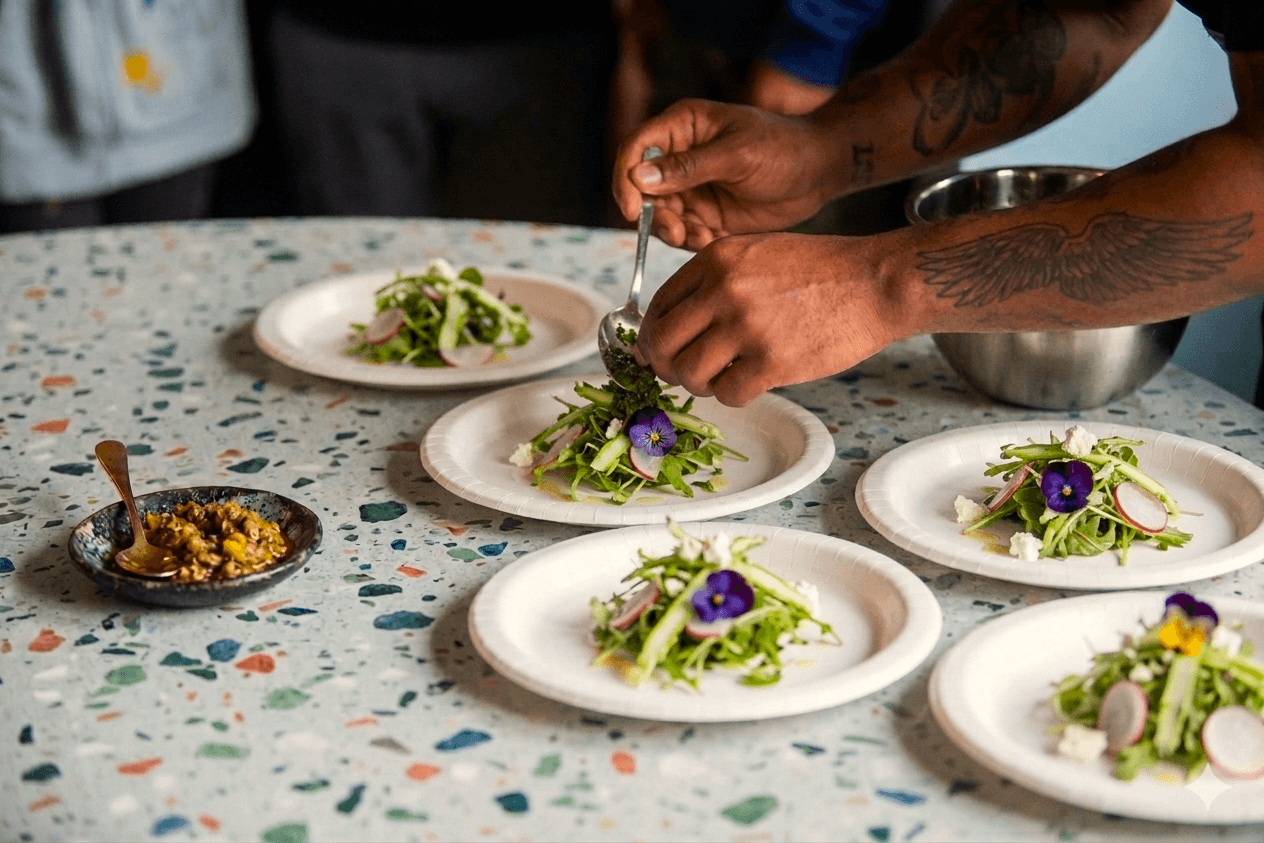
Every semester, HVP partners a school with a professional chef and a registered nutritionist for a series of workshops. Students cook with what they grew, learn to read their own meals, and share the result at a family-facing community event.
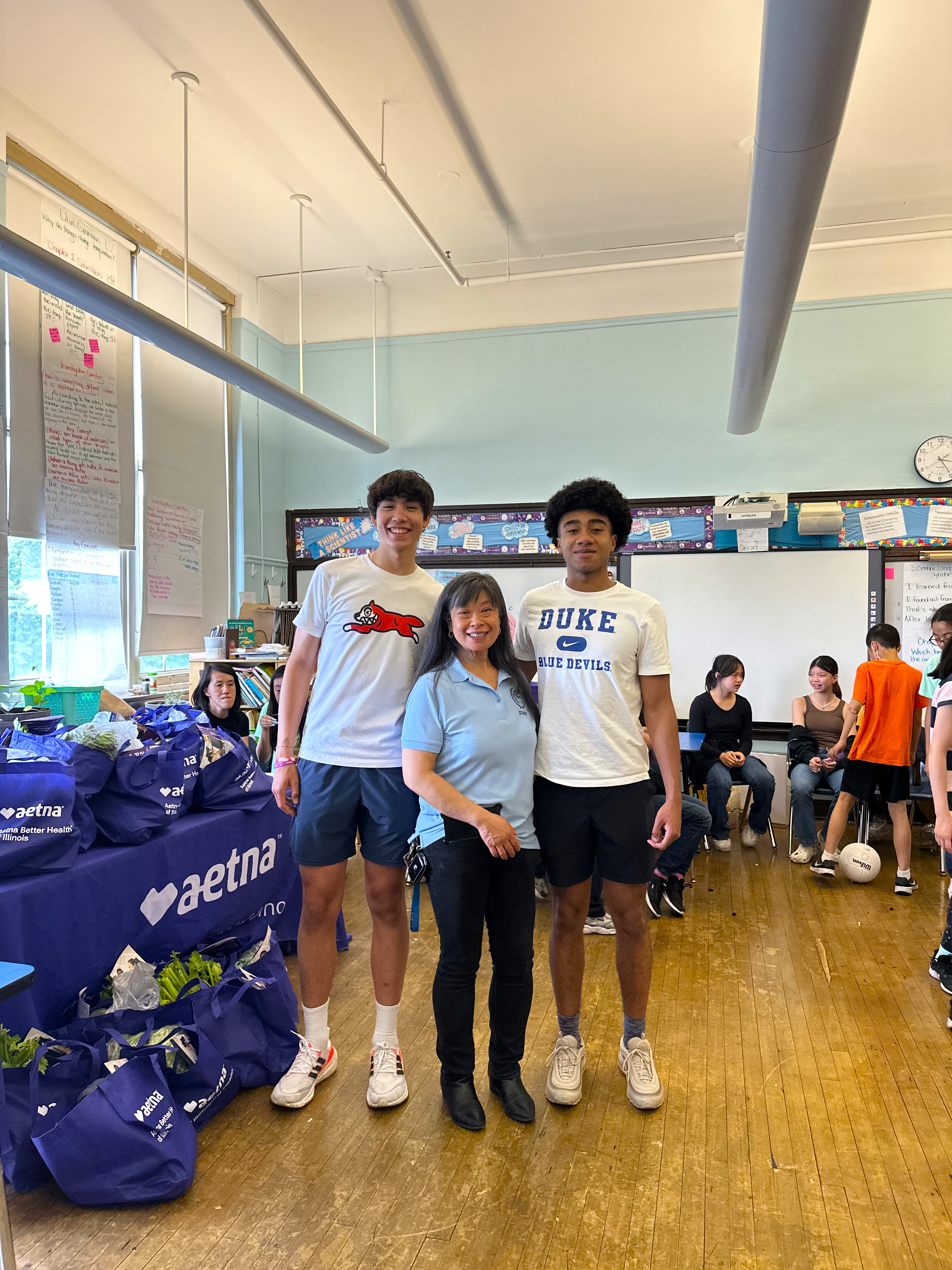
The workshops are where the program becomes visible outside the classroom: family distributions, school cafeteria pop-ups, and neighborhood events funded by partners like Aetna, Pilot Light, and the Chicago Community Trust.
Chef demonstrations
A working chef cooks with the students’ harvest in front of the class.
Nutritionist sessions
A registered nutritionist walks students through the plate they built.
Family distributions
Bags of fresh produce handed out to families at the end of a harvest cycle.
Community events
School-wide events pairing the harvest with music, guest speakers, and partners.
From first conversation to first harvest
Most new installs move from intake to first harvest inside a single semester. Here is what the process looks like for a partner school.
Intake conversation
A 30-minute call with the school’s admin and lead teacher to confirm fit, space, and scheduling.
Site visit and install plan
HVP walks the classroom, confirms the electrical and water layout, and schedules the delivery.
System install
The Rise Gardens unit is delivered and assembled in the classroom. Seeds and nutrients arrive the same week.
Teacher training and student onboarding
HVP runs a 2-session training with the lead teacher and a kickoff session with the students who will manage the garden.
First harvest
Students harvest their first crop off the classroom unit.
First workshop
HVP partners with a chef and nutritionist for the opening workshop, built around what the students just grew.
Start a conversation
If your school or organization is interested in bringing HVP into a classroom, the fastest way forward is a 30-minute intake call. We usually know inside a week whether it’s a fit.